Proof of judgement.
Selected engagements and published work. Each one is a decision that had to be made under real constraints, and the reading that made it.
Two kinds of proof sit below. Private engagements, anonymised to the sector where the client is not public. Published analysis, where the artefact speaks for itself.

Series A readiness, industrial AI software
Situation. A manufacturing-software platform inside a five-entity industrial group was preparing its first institutional Series A, and believed it was ready.
The constraint found. The proof was real, but the fundraise position did not match it. A single customer carried roughly ninety per cent of first-year forecast revenue, and the financial model was built top-down, with no cohort evidence underneath it.
The decision enabled. A ten-week evidence-grade diagnostic. Sixty-six deck claims graded to source, ninety-eight data-room items scored, and a target-investor slate filtered from a universe of three thousand funds. The round was greenlit against five named gates, and the engagement converted to a rolling execution mandate.

AI on the board agenda, waste-to-energy
Situation. A residual operating business inside a listed infrastructure parent was being prepared for a clean sale, and AI had been raised as a board agenda item.
The constraint found. The AI case rested on two threads, valuation uplift and workforce reduction, and both felt right on first inspection. Neither had been tested against the one task that mattered, which was maximising net sale proceeds on a predictable timeline.
The decision enabled. Four parallel research reports, briefed to stress-test the thesis. Twenty-two operators and ten vendors scanned across three regions. The evidence did not support the item, and the recommendation to the board was to remove it. A clear no, argued from the data.

The European Defence-Tech 100
Situation. The United States had its ranked map of venture-backed defence and dual-use companies. Europe had no equivalent, and the procurement data was more fragmented.
The constraint found. European defence funding data is scattered across disclosures, framework awards, and specialist-fund portfolios, with no single clean source. A credible ranking needed a transparent, repeatable method that survived that fragmentation.
The decision enabled. A ranked index of the top one hundred, built from a deduplicated universe of one hundred and forty-nine candidates, on a published momentum model. It records €12.6bn of disclosed private capital across twenty-four countries, and reads the concentration: the top ten hold sixty-two per cent of it. A public reference artefact, method stated in the open.
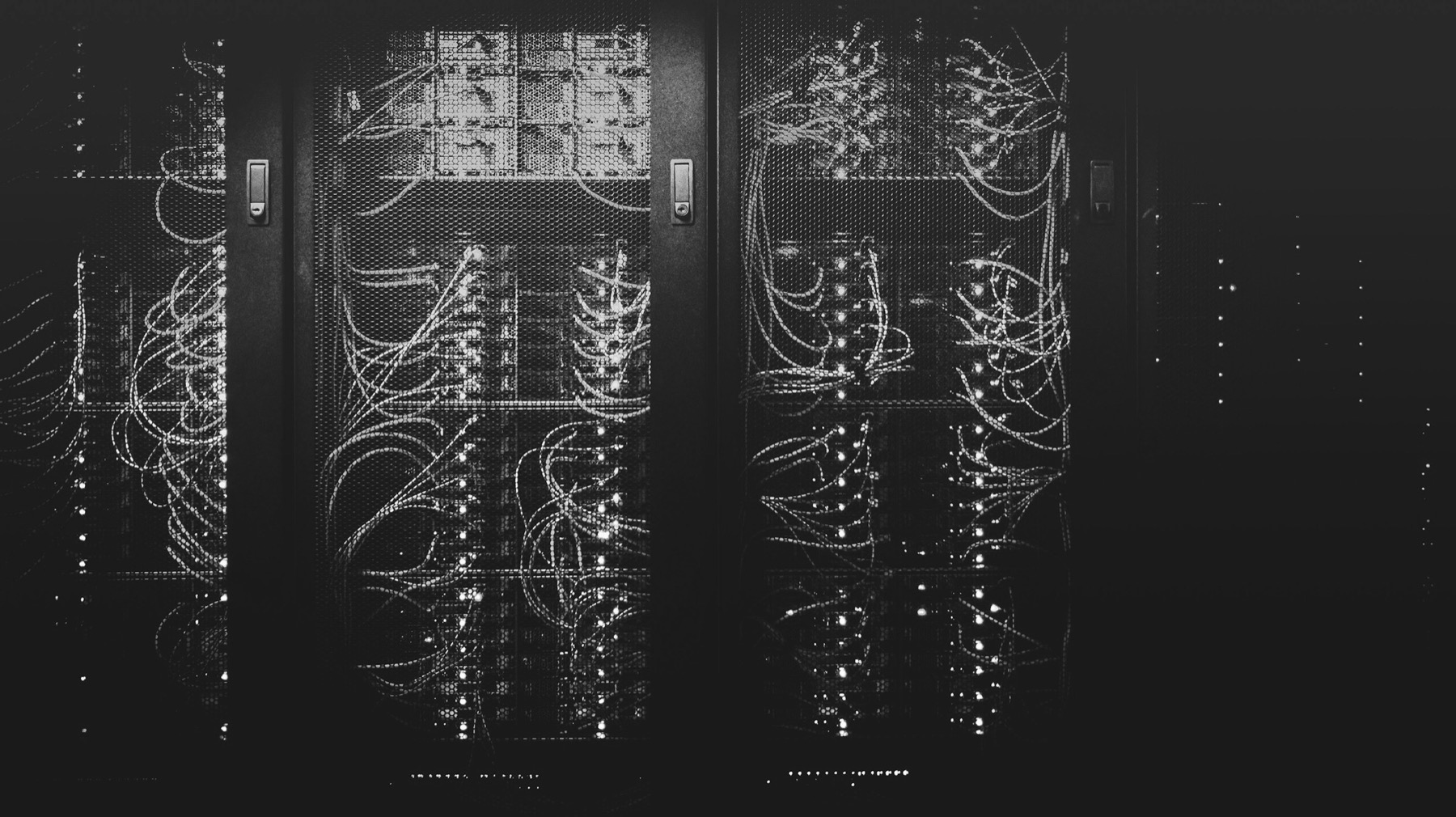
The Physical Half, an H1 industrial review
Situation. By mid-2026 the market was quoting one number, roughly $650bn of hyperscaler capital spending, and treating "the AI trade" as a single thing to be long or short.
The constraint found. That framing hid the structure. The spend was at least four different things, chips, physical plant, the hyperscalers writing the cheques, and the electricity, and each behaved differently across the half.
The decision enabled. A review of the ISI universe, six hundred and ninety-two companies across nine domains, every domain researched twice and the two reads reconciled. It separated the single word into a supply chain under strain, and traced where the strain moved from link to link.

The data centre value chain
Situation. Six hundred billion dollars of hyperscaler capital was flowing into data centre infrastructure, and most analysis stopped at the headline figure.
The constraint found. The value does not accrue evenly. Power had become the binding constraint, with transformer lead times stretched to one hundred and twenty-eight weeks, and margin sat at the extremes of the chain while the middle stayed thin.
The decision enabled. A nine-layer map of where value accrues and where it leaks, from land and grid connection to the final rack. It located the two binding constraints, power and high-bandwidth memory, and read the vertical integration now reshaping the economics.

Prometheus, and what Bezos is building
Situation. A startup with no public product and no named customer raised twelve billion dollars at a forty-one billion dollar valuation, and the coverage filed it next to the frontier AI labs.
The constraint found. That was the wrong shelf. The company is aimed at the physical economy, the design and manufacture of engines, chips and devices. The part almost nobody was reading correctly was the ownership structure.
The decision enabled. A read that ignored the headline number and looked at what the capital was actually buying. It set out why designing physical things needs a different kind of AI, and what the structure signals about where the next decade of value sits.
The reading behind this work is what an advisory engagement buys.
If you have a decision that will define the next eighteen months, start with a thirty-minute conversation.
Book the conversation